

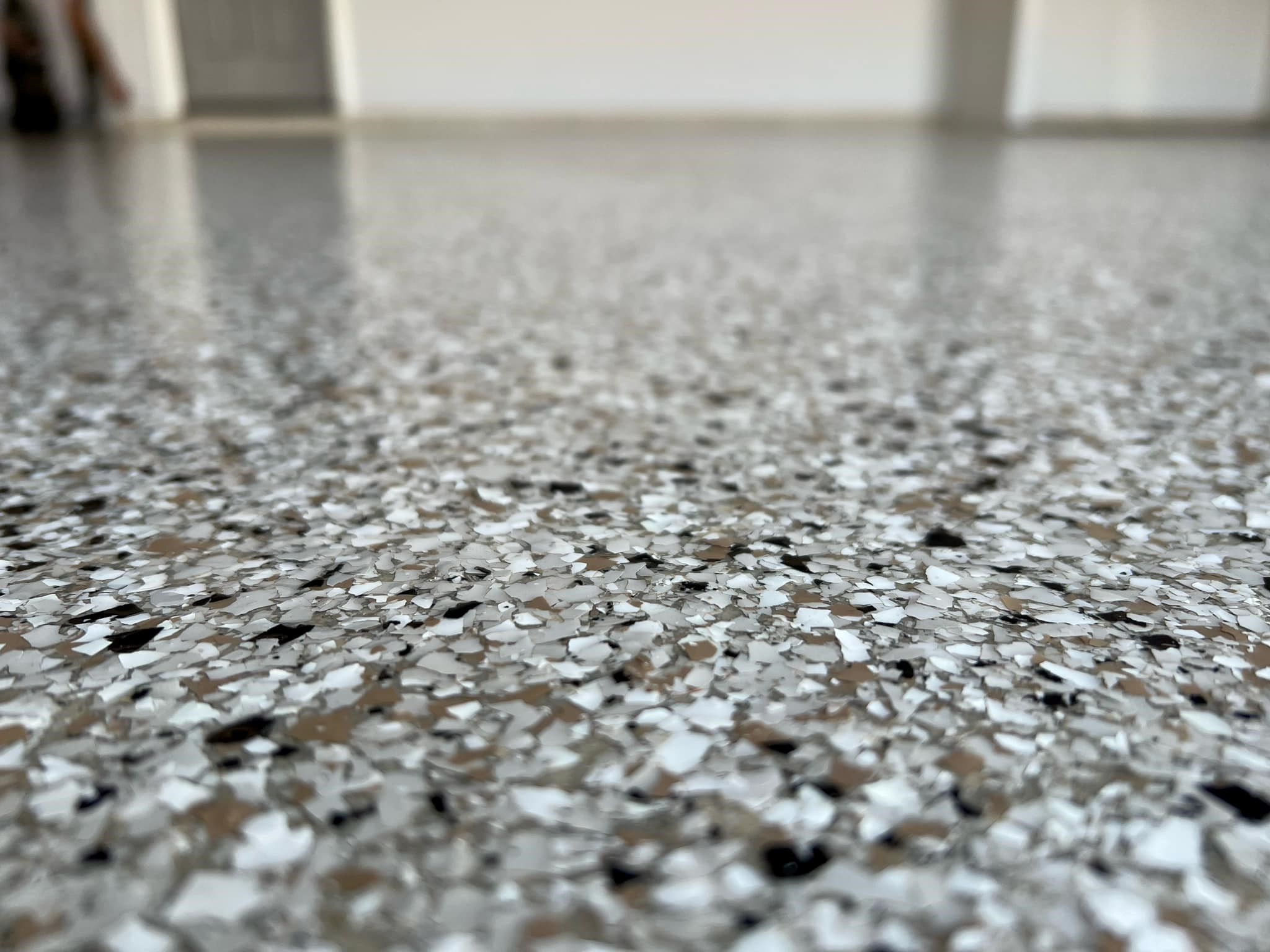
Polyaspartic Garage Floor Coating: Cost, Benefits & Durability
Polyaspartic garage floor coating is a fast-curing, UV-stable polymer coating that bonds to prepared concrete and forms a hard, flexible, chemical-resistant surface. Compared with traditional epoxy, it cures in hours instead of days, resists yellowing in sunlight, and handles temperature swings better, which matters in Oklahoma. It costs more up front than epoxy, but many homeowners find the longer lifespan and one-day installation make up for it. Here’s what it is, what it costs, and how it holds up.
What Is Polyaspartic Coating?
Polyaspartic is a polymer technology related to polyurea. It’s applied in thin layers over a properly prepared concrete slab, and it cures much faster than epoxy. That fast cure is what makes same-day garage floor installs possible. A typical system includes a primer or base coat, an optional decorative layer such as flakes or metallic pigment, and a clear protective topcoat.
ACES 24 Hour Floors installs Penntek polyaspartic and polyurea coatings, and is the only certified Penntek dealer in Northeast Oklahoma.
The Benefits
Fast turnaround. Most residential garages can be coated in a single day, with the floor ready for light foot traffic within a few hours and vehicles within about 24 hours.
UV stability. Standard epoxy can amber or yellow in sunlight over time, especially near garage doors and windows. Polyaspartic resists that discoloration, so the finish keeps its color.
Temperature and humidity tolerance. Epoxy can be fussy about weather during application. Polyaspartic installs across a wider range of conditions, which helps in a state where temperatures can swing dramatically within a week.
Flexibility. Concrete expands and contracts with temperature. A flexible coating is better able to move with the slab, which reduces the risk of cracking or delaminating.
Chemical and abrasion resistance. A quality system stands up to motor oil, gasoline, road salt, tire marks, and everyday wear.
Low-VOC formulations. Penntek’s formulations are low in volatile organic compounds, which the EPA notes can affect indoor air quality. That’s a real consideration for attached garages.
Easy cleaning. The sealed surface resists stains and wipes up with a mop, unlike bare concrete that soaks up spills and sheds dust.
How Durable Is It?
Durability depends on two things: the product and the preparation. A premium polyaspartic system installed over a properly ground, repaired, and moisture-tested slab is built to last for many years, and select Penntek installations from ACES come with a lifetime warranty.
Preparation is where many floors succeed or fail. Industry groups like the International Concrete Repair Institute have established surface-profile standards for exactly this reason, since the coating can only bond as well as the concrete underneath allows. Diamond grinding, crack repair, and moisture testing aren’t optional extras, and they follow the kind of slab-assessment practices promoted by the American Concrete Institute.
How Much Does Polyaspartic Garage Floor Coating Cost?
Polyaspartic coatings generally cost more up front than epoxy, because the material is more advanced and the install is faster and more specialized. The exact price for your garage depends on several things:
- Square footage. Larger garages often have a lower cost per square foot.
- Slab condition. Cracks, spalling, and old coatings that need to be removed add prep work.
- Finish choice. A solid color, a decorative flake blend, and a metallic finish are all priced differently.
- Moisture issues. Slabs that need vapor mitigation add to the scope of work.
Because every floor is different, the most accurate way to get a number is to talk to someone who can look at yours. Call ACES at 918-850-6898 for a free quote. We offer free on-site consultations across the greater Tulsa area, and 0% financing is available for qualifying projects.
Is It Worth the Extra Cost?
Think in terms of cost over time. A cheaper coating that peels, yellows, or needs recoating in a few years can cost more in the long run than a system built to last. If you want a floor installed once, without a multi-day wait and without worrying about sun yellowing, polyaspartic is hard to beat. If budget is the main driver and you’re comfortable with a longer install window, epoxy is still a viable option.
Explore the ACES Product Line
- Premium Penntek Floor Coatings are the polyaspartic and polyurea systems we install on garage floors.
- Chip Floor Color Samples & Finishes shows the decorative flake blends you can choose from.
- Ashford Formula – Concrete Densifier & Sealer hardens and seals concrete when you want a clear, natural finish.
- Retroplate Concrete Polishing gives concrete a smooth, glossy polished look.
You can also see all of the garage floor coating options we install.
Frequently Asked Questions
How long does a polyaspartic garage floor last? With proper surface preparation and a quality system, a professionally installed polyaspartic floor can last many years with minimal maintenance. Select Penntek installations come with a lifetime warranty.
Is polyaspartic better than epoxy? For most garages, polyaspartic offers faster curing, better UV resistance, and greater flexibility. Epoxy generally costs less up front.
Can polyaspartic coating be installed in one day? Yes. Fast cure times are what allow a full garage floor to be prepped, coated, and returned to light use within a day.
Does polyaspartic coating peel? Peeling is almost always a surface-preparation or moisture problem, not a coating problem. Proper grinding and moisture testing are what prevent it.
Is polyaspartic coating slippery? It can be, especially when wet, so anti-slip additives and decorative flakes are commonly used to add traction.
Author: Johnny Spriggs