

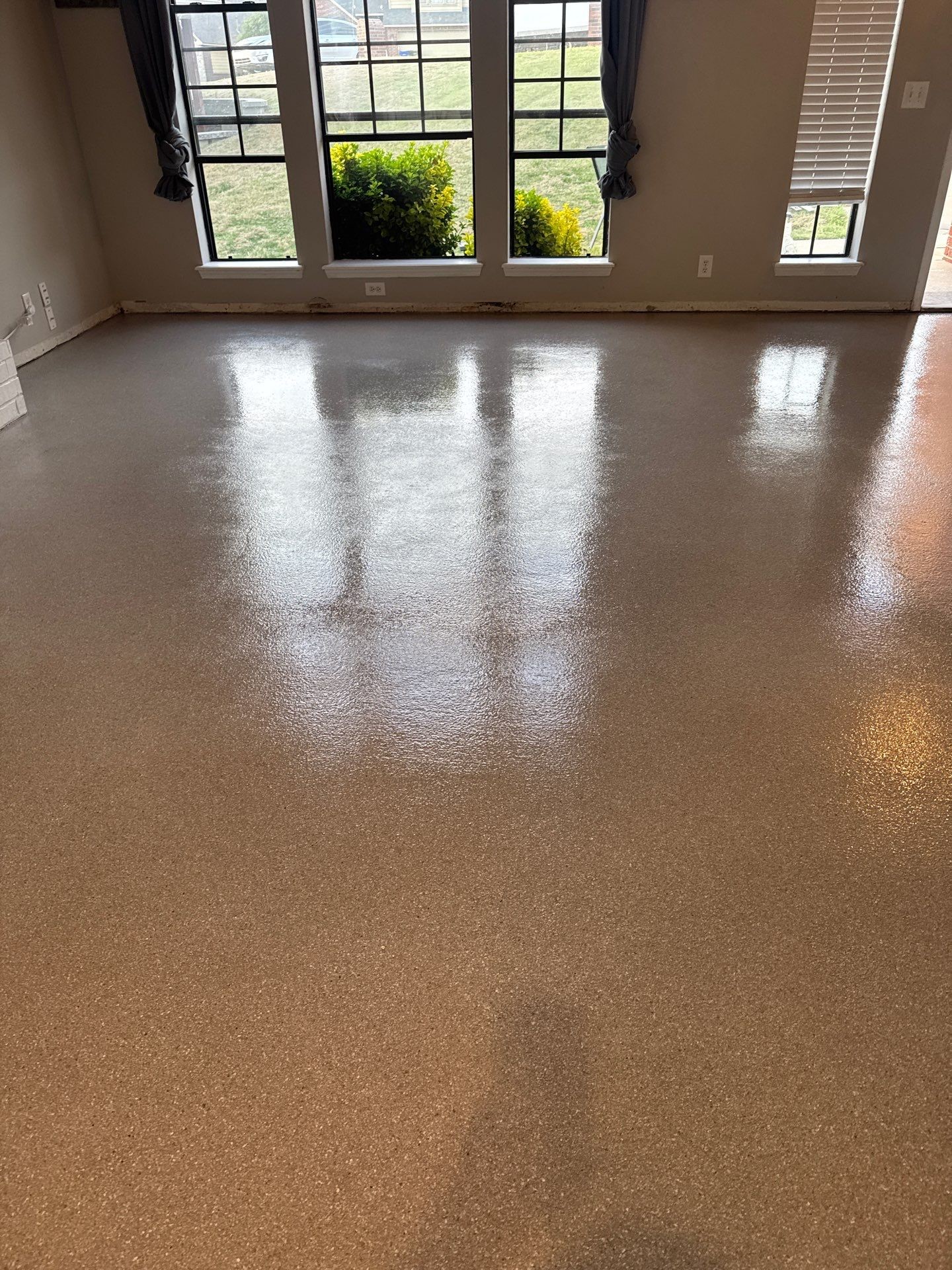
Concrete Floor Solutions for Garages, Basements & Patios
Bare concrete isn’t built to be a finished surface — it stains, cracks, dusts over time, and stays cold and uninviting no matter how you use the space. Concrete floor solutions solve that, transforming basic slabs into durable, good-looking surfaces suited to how you actually live and work. Here’s a breakdown of the right solution for each common space.
What Counts as a “Concrete Floor Solution”?
Broadly, it’s any process that repairs, protects, and finishes an existing concrete slab — as opposed to tearing it out and pouring new concrete. That includes crack repair, surface grinding, moisture mitigation, and a protective coating system on top. The right combination depends heavily on where the floor is and how it’s used.
Garages
Garage floors take the most abuse of any concrete surface in a home — hot tires, dropped tools, chemical spills, road salt, and constant foot traffic. A polyaspartic or polyurea coating is generally the best solution here, since it cures fast (often ready for vehicles within 24 hours), resists chemicals and abrasion, and won’t yellow under a sunny garage door.
Basements
Basements bring a different challenge: moisture. Concrete is porous, and below-grade slabs are constantly exposed to ground moisture that can migrate upward and cause a coating to bubble or peel if it isn’t addressed first. A proper basement solution starts with moisture testing and, when needed, a vapor barrier — guidance that follows the kind of assessment protocols outlined by the American Concrete Institute — before any coating is applied. Once that’s handled, a coated basement floor becomes a genuinely usable extension of the home: a home office, gym, or family room instead of cold, gray storage space.
Patios and Outdoor Living Spaces
Outdoor concrete deals with constant sun exposure, temperature swings, and moisture from rain — all of which can cause standard coatings to fade or fail faster than they would indoors. A UV-stable coating system holds its color and texture far longer outdoors, and slip-resistant textures can be added for pool decks and walkways where wet feet are a safety concern.
Why Surface Prep Determines the Outcome
Regardless of the space, the single biggest factor in how long a concrete floor solution lasts is surface preparation. Grinding the slab to open its pores, repairing cracks, and testing for moisture all happen before any coating goes down — and skipping these steps is the most common reason DIY kits and lower-end jobs fail within a couple of years. Surface profiling standards from groups like the International Concrete Repair Institute exist specifically because prep quality predicts coating performance more reliably than the coating brand itself.
Choosing the Right System for Your Space
| Space | Primary Concern | Recommended Solution |
| Garage | Chemicals, hot tires, abrasion | Polyaspartic/polyurea coating |
| Basement | Moisture, cold/damp feel | Moisture mitigation + coating |
| Patio/Pool Deck | UV exposure, slip resistance | UV-stable, textured coating |
| Commercial/Industrial | Heavy traffic, chemical exposure | Industrial-grade polyurea system |
Why ACES 24 Hour Floors
As the only certified Penntek dealer in Northeast Oklahoma, ACES 24 Hour Floors brings a coating system specifically engineered for fast installation and long-term durability — most residential projects are completed and usable within a single day. Every project starts with a free, on-site evaluation so you get a solution matched to your specific floor, not a one-size-fits-all package.
Frequently Asked Questions
What’s the best concrete floor solution for a garage? A polyaspartic or polyurea coating is generally the best fit for garages, since it cures quickly, resists hot tire pickup and chemicals, and holds up to daily vehicle traffic.
Can a basement floor really be coated if it’s damp? Yes, but moisture needs to be tested and addressed first — usually with a vapor barrier — before a coating is applied. Skipping this step is the most common reason basement coatings fail.
Do outdoor concrete coatings fade in the sun? Lower-quality or standard coatings can fade or discolor with UV exposure. UV-stable systems, like the polyaspartic coatings ACES installs, are formulated to resist that fading over time.
How long does a concrete floor solution typically last? With proper surface prep and a quality coating system, most installations last well over a decade, and some come with a lifetime warranty on select products.
Author: Johnny Spriggs