

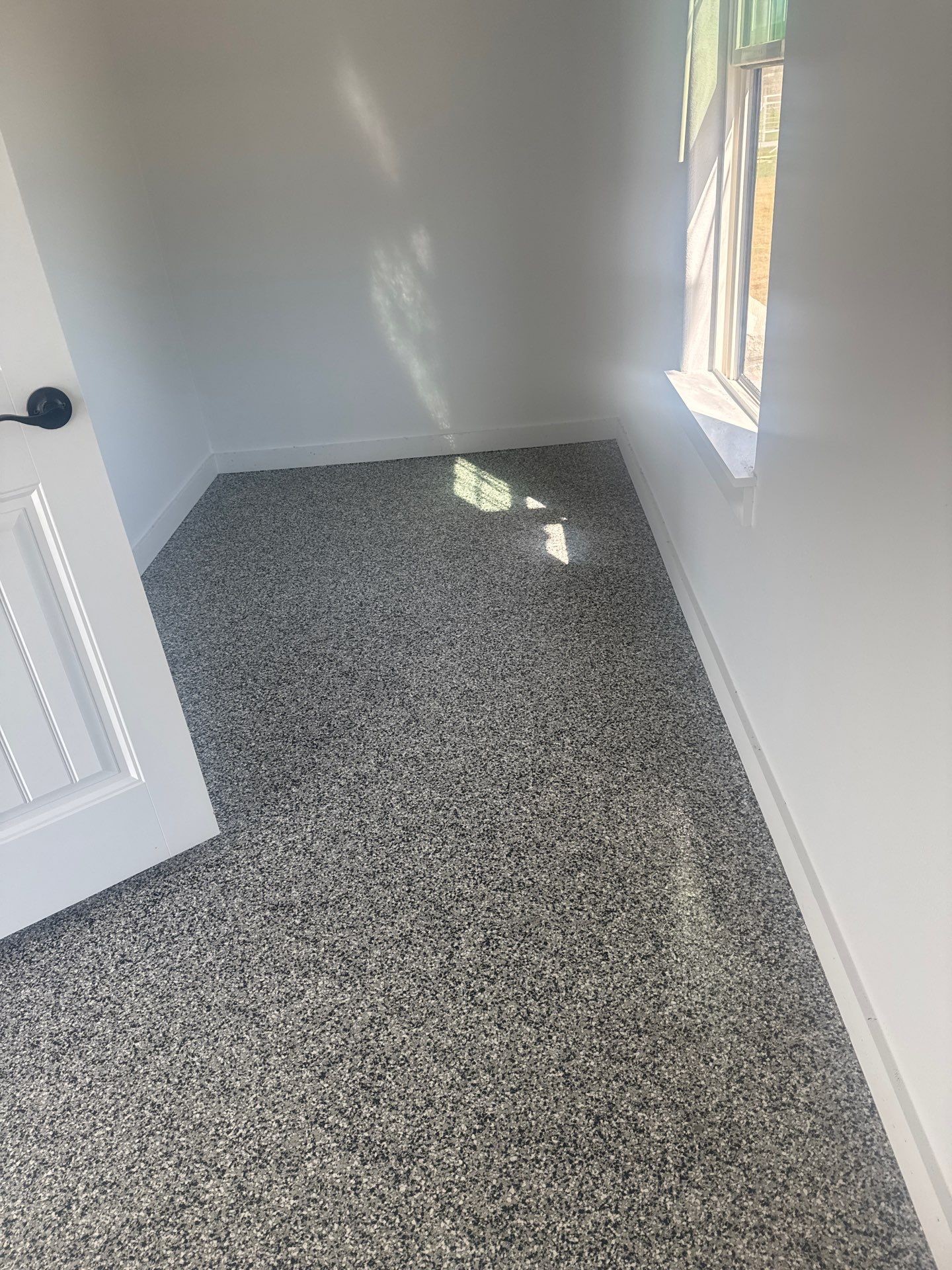
Concrete Floor Restoration: Repair, Resurface, or Replace?
Cracked, pitted, stained, or crumbling concrete doesn’t always mean you need to tear it out and start over. In most cases, concrete floor restoration — repairing and resurfacing the existing slab — is faster, cheaper, and just as durable as full replacement. The trick is knowing which approach your floor actually needs.
The Short Answer
Most concrete floors can be restored rather than replaced. Minor cracks and surface damage usually just need repair and a protective coating. More significant wear — spalling, widespread cracking, or an uneven surface — typically calls for resurfacing. Full replacement is only necessary when the slab has structural damage, like major foundation settling or deep, active cracks that indicate the concrete itself has failed.
How to Tell What Your Floor Needs
Repair is the right call when damage is cosmetic or minor: hairline cracks, small chips, light staining, or surface dusting. A qualified installer can patch and seal these issues, then apply a coating that locks the surface down and prevents further deterioration.
Resurfacing makes sense when the slab itself is structurally sound but the surface is worn, pitted, discolored, or has multiple areas of damage. Resurfacing involves grinding down the existing surface, repairing any cracks or low spots, and applying a new coating system — essentially giving you a like-new floor without breaking up the old slab.
Replacement is reserved for floors with real structural problems: deep cracks that keep growing, sections that have heaved or sunk, or a slab that was poured incorrectly in the first place. This is the most expensive and disruptive option, so it’s worth getting an honest, on-site evaluation before assuming it’s necessary.
Why Restoration Beats Replacement (When It’s an Option)
Cost. Restoration is almost always significantly cheaper than demolition and a new pour, since you’re not paying for concrete removal, disposal, and a full re-pour.
Time. Replacing a slab means waiting for demolition, a new pour, and weeks of curing before it’s usable. Restoration and coating can often be completed and ready for use within a day or two.
Durability. A properly resurfaced and coated floor isn’t a temporary fix — it’s built to handle the same abrasion, chemical exposure, and daily wear as a brand-new slab, often with better resistance than bare concrete ever had.
What the Restoration Process Actually Looks Like
- Inspection and moisture testing. Before anything is applied, the slab needs to be evaluated for cracks, moisture issues, and overall condition — a step the American Concrete Institute identifies as critical to preventing coating failure down the road.
- Surface preparation. This usually means grinding the concrete to open the pores and remove old coatings, oil stains, or contaminants — the single biggest factor in how well a coating bonds and lasts. The International Concrete Repair Institute developed the industry-standard surface profile system contractors use to measure proper prep.
- Crack and joint repair. Cracks are filled and stabilized so they don’t telegraph through the new coating.
- Coating application. A protective, decorative coating — like a polyaspartic or epoxy system — is applied to seal, strengthen, and finish the surface, using low-VOC formulations that support better indoor air quality in enclosed spaces like garages and basements.
Skipping or rushing any of these steps is the most common reason restored floors fail early. This is where a lot of DIY kits and lower-end contractors cut corners.
Is Restoration Right for Your Floor?
If your garage, patio, warehouse, or basement floor is showing wear but the slab isn’t structurally compromised, restoration is almost always the smarter move — faster, less expensive, and just as durable as starting over. The best way to know for sure is a free, in-person evaluation, since cracks that look minor can sometimes point to bigger issues underneath, and vice versa.
Want More Than a Repair? Consider a Full Upgrade
Sometimes the goal isn’t just to fix what’s damaged — it’s to walk away with a completely upgraded floor. If that’s the case, ACES 24 Hour Floors is the team for the job. Instead of a basic patch-and-seal, our crew comes out and installs a full polyurea coating system directly over your existing slab — one of the toughest, most durable flooring upgrades available, with same-day installation and a floor that’s ready for full use in as little as 24 hours. It’s the difference between simply restoring what you had and upgrading to a floor built to outperform it.
Frequently Asked Questions
How do I know if my concrete needs to be replaced instead of restored? Signs that point to replacement include deep, actively widening cracks, sections of the slab that have visibly sunk or heaved, and recurring moisture problems that repair can’t resolve. A professional inspection is the most reliable way to know for certain.
Can cracked concrete be restored, or does it always need to be replaced? Most cracked concrete can be restored. Cracks are repaired and stabilized during surface prep, then sealed under a protective coating that prevents them from spreading further.
How long does concrete floor restoration take? With modern coating systems like polyaspartic, restoration and coating can often be completed in a single day, with the floor ready for light use within 24 hours.
Is restoration cheaper than replacing a concrete floor? Yes, in almost every case. Restoration avoids the cost of demolition, disposal, and a new concrete pour, while still delivering a durable, long-lasting surface.
Author: Johnny Spriggs