

Garage Floor Epoxy: Types, Durability & Cost Guide
Garage floor epoxy is a two-part resin coating that bonds to concrete and cures into a hard, glossy, chemical-resistant surface. It’s one of the most popular ways to upgrade a garage floor, but “epoxy” covers several very different products, from thin DIY kits to thick professional systems. Understanding the types, how long each lasts, and what it really costs will help you decide whether epoxy is the right fit, or whether a faster-curing option makes more sense.
What Is Garage Floor Epoxy?
Epoxy coatings combine a resin and a hardener that react chemically, forming a rigid, plastic-like layer on top of the concrete. A well-installed epoxy floor resists oil, tire marks, and stains, and it’s much easier to clean than bare concrete, which absorbs spills and sheds dust.
Types of Garage Floor Epoxy
Water-based epoxy. Thin and easy to apply, which is why it shows up in many DIY kits. It’s the least expensive option, but it also builds the thinnest layer and generally wears the fastest.
Solvent-based epoxy. Penetrates concrete a bit better than water-based products but gives off strong fumes during application and requires good ventilation.
100% solids epoxy. A thick, high-build professional product with no solvents. It creates a durable, heavy-duty layer and is common in professional installations.
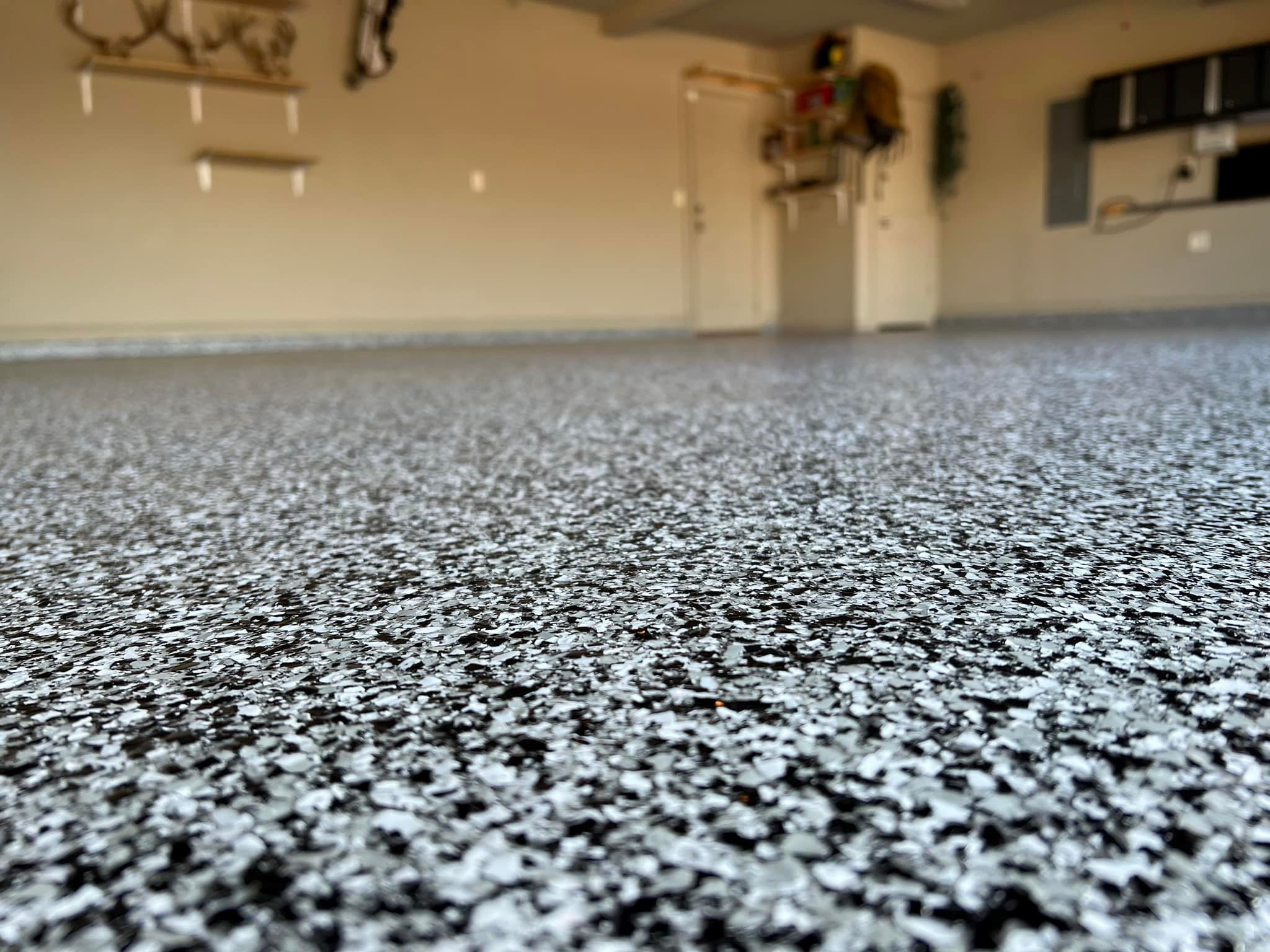
Epoxy with decorative flakes. A flake or chip system broadcast into the epoxy adds color, hides imperfections, and improves traction. This is the most common finish for residential garages.
Metallic epoxy. Metallic pigments produce a swirled, high-end look. It’s more labor-intensive, so it costs more.
Epoxy base with a polyaspartic topcoat. Many installers pair an epoxy base coat with a polyaspartic topcoat to get epoxy’s build and bond plus polyaspartic’s UV resistance and scratch resistance.
How Durable Is Epoxy?
With proper preparation, a professionally installed epoxy floor commonly lasts 10 years or more. DIY and thin-film products generally don’t last as long.
Epoxy’s main weaknesses are worth knowing:
- UV yellowing. Standard epoxy can amber or yellow in direct sunlight over time, especially near garage doors and windows.
- Slow cure. It often takes days before light use and up to about a week before vehicles.
- Temperature and humidity sensitivity. Installation conditions affect how well it cures.
- Hot tire pickup. Lower-quality products can soften and lift when hot tires sit on them.
Preparation matters more than the product. Industry groups like the International Concrete Repair Institute have established surface-profile standards because the coating can only bond as well as the concrete beneath it allows. Grinding, crack repair, and moisture testing are non-negotiable, and the American Concrete Institute is a good reference for broader concrete best practices.
How Much Does a Garage Floor Epoxy Cost?
Cost varies widely depending on the system and how much preparation your slab needs. DIY kits are the cheapest route but typically use thinner products, while professional systems cost more and are built to last. Decorative flake and metallic finishes add to the price compared with a simple solid color.
What drives the price:
- Square footage
- Slab condition
- How much grinding and crack repair is needed
- The finish you choose
- Whether a protective topcoat is added
Since every garage is different, the simplest way to find out what yours would cost is to ask. Call ACES at 918-850-6898 for a free quote.
Epoxy vs. Polyaspartic: Which Should You Choose?
Epoxy usually costs less up front. Polyaspartic costs more but cures much faster, resists UV yellowing, and flexes better with the slab, which is why many homeowners prefer it for garages that get sun or see big temperature swings. ACES installs Penntek polyaspartic and polyurea systems, with same-day installation and a lifetime warranty on select installations.
Explore the ACES Product Line
- Premium Penntek Floor Coatings are our fast-curing alternative to traditional epoxy.
- Chip Floor Color Samples & Finishes shows the decorative flake blends available for your floor.
- Ashford Formula – Concrete Densifier & Sealer is a clear, natural-look option that hardens and seals concrete.
- Retroplate Concrete Polishing produces a glossy polished finish with no coating at all.
You can also see the full list of garage floor coating options we install.
Low-VOC formulations are also worth considering. The EPA explains how volatile organic compounds can affect indoor air quality, which matters for attached garages.
Is Epoxy Worth It?
For most garages, a professionally installed coating beats bare concrete: it resists stains, cleans easily, and looks better. Whether epoxy specifically is the best choice depends on your budget, how much sun your garage gets, and how long you’re willing to wait for the floor to cure.
Frequently Asked Questions
How long does a garage floor epoxy last? A professionally installed epoxy floor commonly lasts 10 years or more. DIY and thin products typically wear out sooner.
How long does epoxy take to cure? Often 24 to 72 hours before light foot traffic and up to about a week before parking vehicles, depending on the product and conditions.
Does epoxy turn yellow? Standard epoxy can yellow with sun exposure over time. UV-stable topcoats and polyaspartic coatings resist this.
Can I apply epoxy over an old coating? Failed or peeling coatings need to be ground off first. Applying epoxy over a weak coating leads to early failure.
Is DIY epoxy worth it? DIY kits are cheaper, but they’re usually thinner and the result depends heavily on how well you prepare the slab. Professional systems generally last longer.
Author: Johnny Spriggs